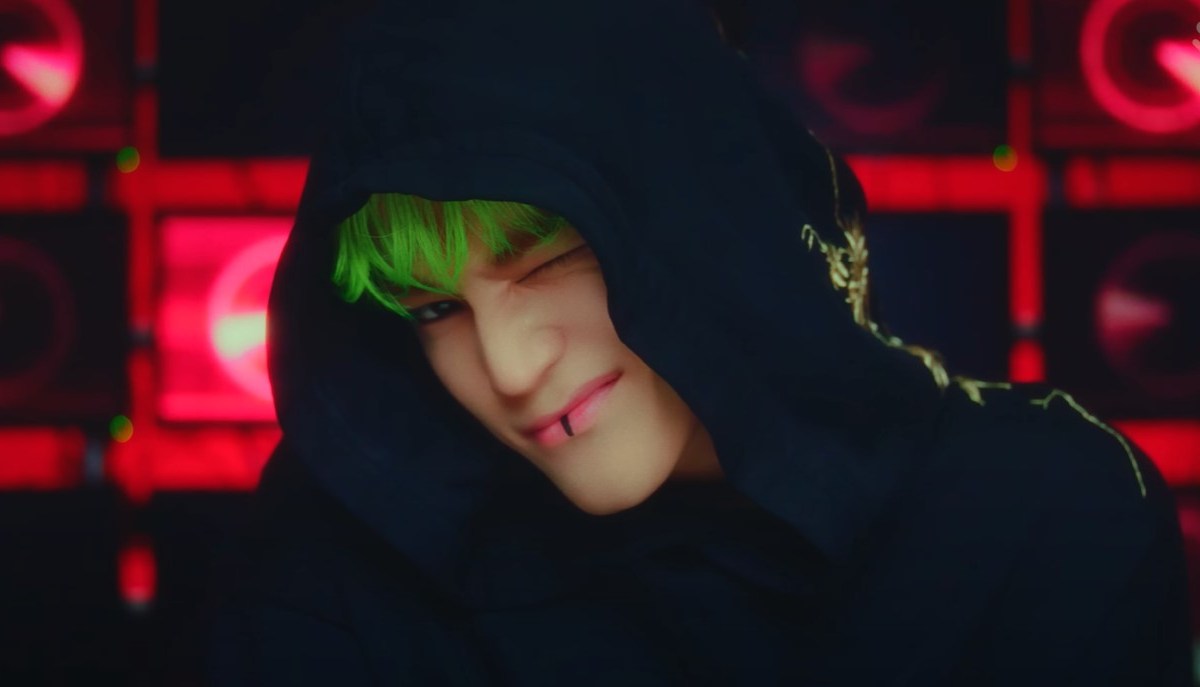
Making his solo return on Monday was TAEYONG from NCT, with the shared title single and mini-album, SHALALA. While this is promoted as his solo debut, this isn’t TAEYONG”s first solo single. We previously got singles from TAEYONG through the release from the SM Station series, with the last being Long Flight from 2019.
With hip-hop influences and a very synth heavy production, SHALALA definitely heads in the direction that I had expected for a TAEYONG solo release. But we aren’t talking about the same combination of the two that (majority of the time) works for NCT 127 or U’s releases. SHALALA ends up bring a lot weaker, with TAEYONG’s delivery failing to evoke much of a reaction from me. I find his delivery in SHALALA to be quite monotonous. He essentially keeps to a low tone throughout the song and he never really picks up from where he begins. His flow is good, but there was room for TAEYONG to potentially be more expressive and to have driven more energy into the song. This potentially could have made SHALALA more ‘dynamic’. It is a pity that we never get there. Subsequently, this causes other parts of SHALALA to fall short, such as the lack of a memorable hook. Energy would have gone a long way, and this was a department of the song that would have benefited from this. If I had to point out a positive, I would say there were some decent vocal moments during the choruses (i.e., the “Shalala Lala“) and the second verses. They were brief and had a decent ring. But nothing long-lasting. As for the instrumentation and production, I am on the fence. There is a fair bit going on, but I liked the focus on percussive elements to give SHALALA a unique tinge. I think it does complement TAEYONG’s good flow in the song, but it definitely felt grating at certain moments. Overall, SHALALA is not a song that I would be going back to that much.
I can definitely say that the music video faired much better than the song. I really liked the idea of a God controlling everything (as you would expect), but on a computer system. But he ended up being hacked (how modern), resulting in a number of characters (all played by TAEYONG) being placed into different and incorrect metaverses (how trendy). Despite being misplaced, each character somehow excelled, reflecting the song’s message of shining wherever you are. We see Gamerboy TAEYONG introduce gaming to other yetis during the Ice Age, Knight TAEYONG from the 1800s excelling in a 1980s office job and yeti TAEYONG excel at bowling in 2023. In the end, God ends up resetting everything, by deleting all the metaverses (and effectively the world) but dragging all of it to the recycle bin on his computer. At the end, we see God close the clapperboard, effectively restarting life again. It is a weird concept, but funny and made for a good viewing.
Like the music video, the performance for this comeback also fairs better than the song. His moves were super clean, he had really great command of his body (which makes complete sense, given that he is known for his choreography skills) and that he shows off his personality and sense of style in the hip-hop centric performance. I also like the playful side to the choreography, which he pulls off effortlessly.
Song – 5/10
Music Video – 8/10
Performance – 9/10
Overall Rating – 6.7/10
 KPOPREVIEWED